
If you opened scoprigaeta.it on your phone, you’ve already seen it: it’s the center button on the bottom bar. One tap opens Enea, Gaeta’s AI assistant: available 24 hours a day, in 5 languages, for free, without downloading any app. It tells you what’s on tonight, where to park, whether the Castello (castle) is open on Monday — and if you ask, it guides you there with navigation.
However, this article is not a user guide. It stems from a freshly published news story, and from a question we can’t get out of our heads after reading it.
The city presents its tourist guide. On paper.
On 4 August 2026, in the Aula Consiliare del Comune di Gaeta (the town hall council chamber), «La Perla del Tirreno» was presented — the new tourist guide to the city written by Jason Forbus and Lino Sorabella, featuring photographs by Paolo Di Tucci and an illustrated map by Francesco Mignano. A volume complete with opening hours, useful contacts, and services, translated into English, on sale in local bookstores and accommodation facilities. Mayor Cristian Leccese called it «a concrete and top-level response to the strong demand for promoting our territory» and «a modern, elegant, and essential welcoming tool for tourism development» (Latina Oggi).
As for the authors’ work, there’s nothing negative to say: a well-crafted book, born — worth noting — from a private initiative, just like ours. The word we pause on is a different one: «modern». Because Gaeta already has a modern welcoming tool. It has been active for years, it is working tonight as well, and it was never mentioned in the Aula Consiliare.
Gaeta is ahead of its time. And doesn’t know it.
It is worth pausing for a moment to consider what all this means. A town of twenty thousand inhabitants has an AI tourist assistant operational and in production for years — not a prototype, not an announcement, not a pilot project. What major cities are still designing, or paying millions to have, is already here and working: it responds to thousands of conversations every season, welcomes foreign tourists in their language, and works when offices are closed. For a town of this size in Italy, we know of nothing like it. Gaeta is at the forefront — objectively, measurably.
And the value isn’t just what you see on the surface. Every question asked to Enea teaches us something about the real tourist demand of this town: what visitors are looking for, at what time of year, at what hour, in what language, and what they can’t find. It is a snapshot of tourism in Gaeta that updates itself every day, and that no commissioned survey could ever match. This asset grows with every season: what Enea delivers today is just the tip of what it will deliver in the years to come.
And this is where the silence stops being just a lack of courtesy and becomes a problem. Because everything suggests that the local administration has not realized it has such a tool right at home: it doesn’t cite it, doesn’t use it, and doesn’t take it into account when planning destination marketing. We aren’t asking them to celebrate it — we are asking them to be aware of it. Because a city that holds an advantage without realizing it will eventually waste that advantage. And that wouldn’t be a loss for ScopriGaeta: it would be a loss for Gaeta.
The differences, one by one
Let’s put the two tools side by side, point by point. It’s not out of malice: «modern» is a word you can measure.
- Opening hours. Enea knows day-by-day opening hours for 118 attractions, and when they change, we update them the very same day: last week the Complesso della SS. Annunziata switched to summer hours, and within the day Enea was already answering with the new ones. A guide printed in July will have that opening time wrong until the next reprint — and whoever bought it has no way of knowing.
- The ZTL (limited traffic zone). Ask “is the ZTL active tonight?” and it answers with the real schedule for the access points: at 21:00 for the historic center, at 19:00 for Via Annunziata, and Via Indipendenza pedestrianized 24/7. On paper, the ZTL is a paragraph written months in advance: regulations change every season, but the page doesn’t.
- Parking. 27 parking lots with real rates — the former Avir in Serapo: €2 per hour, €15 per day — location on the map, and the navigation system to take you there. Try having a printed page guide you there.
- Waste sorting. “What gets put out tonight?” — paper and cardboard, out between 20:00 and 05:00. Even local residents in Gaeta ask Enea about it.
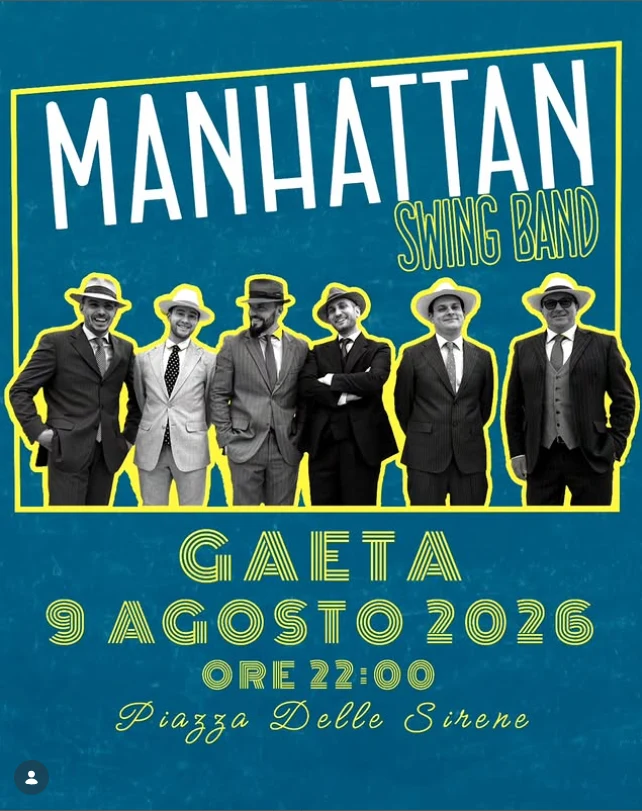
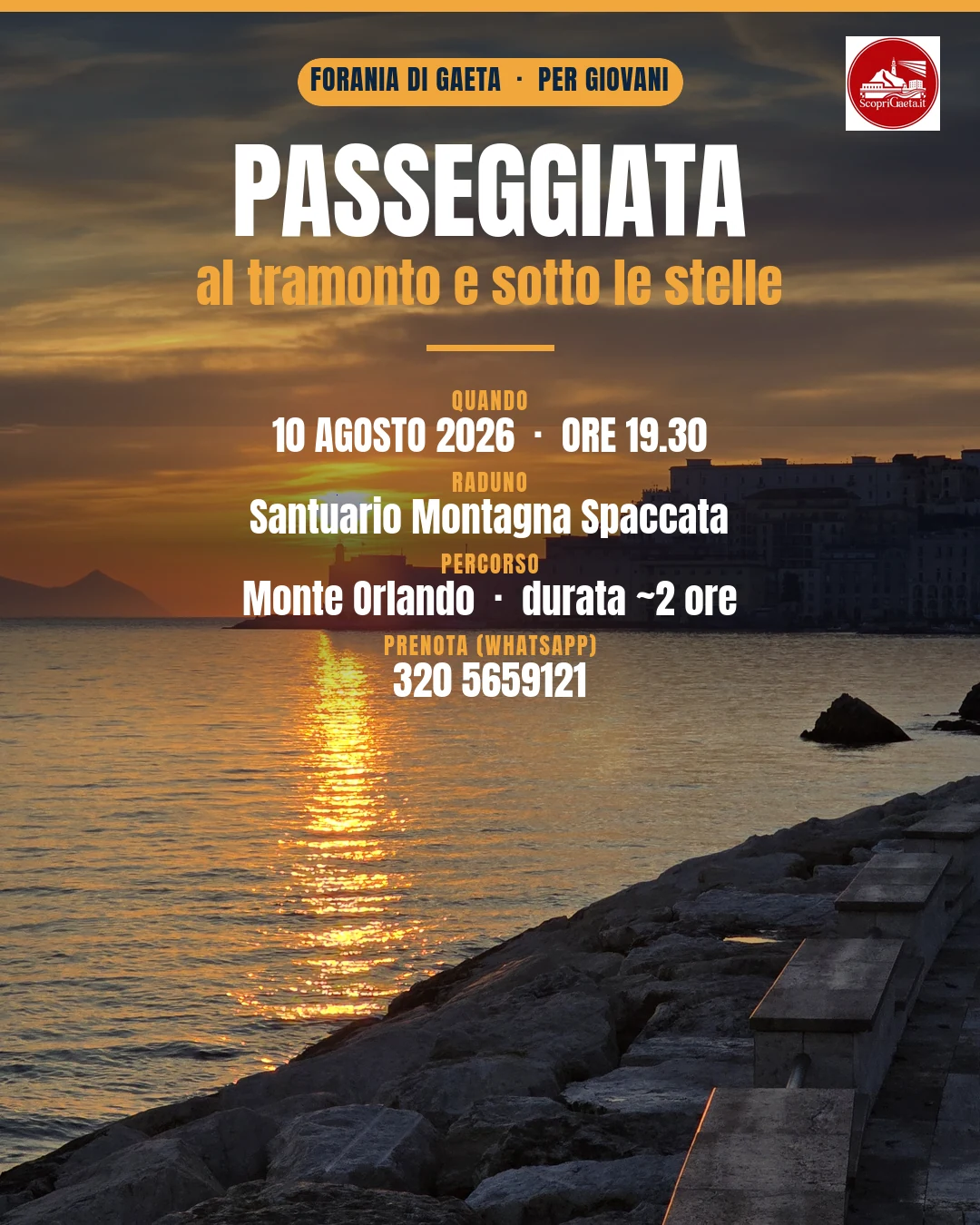
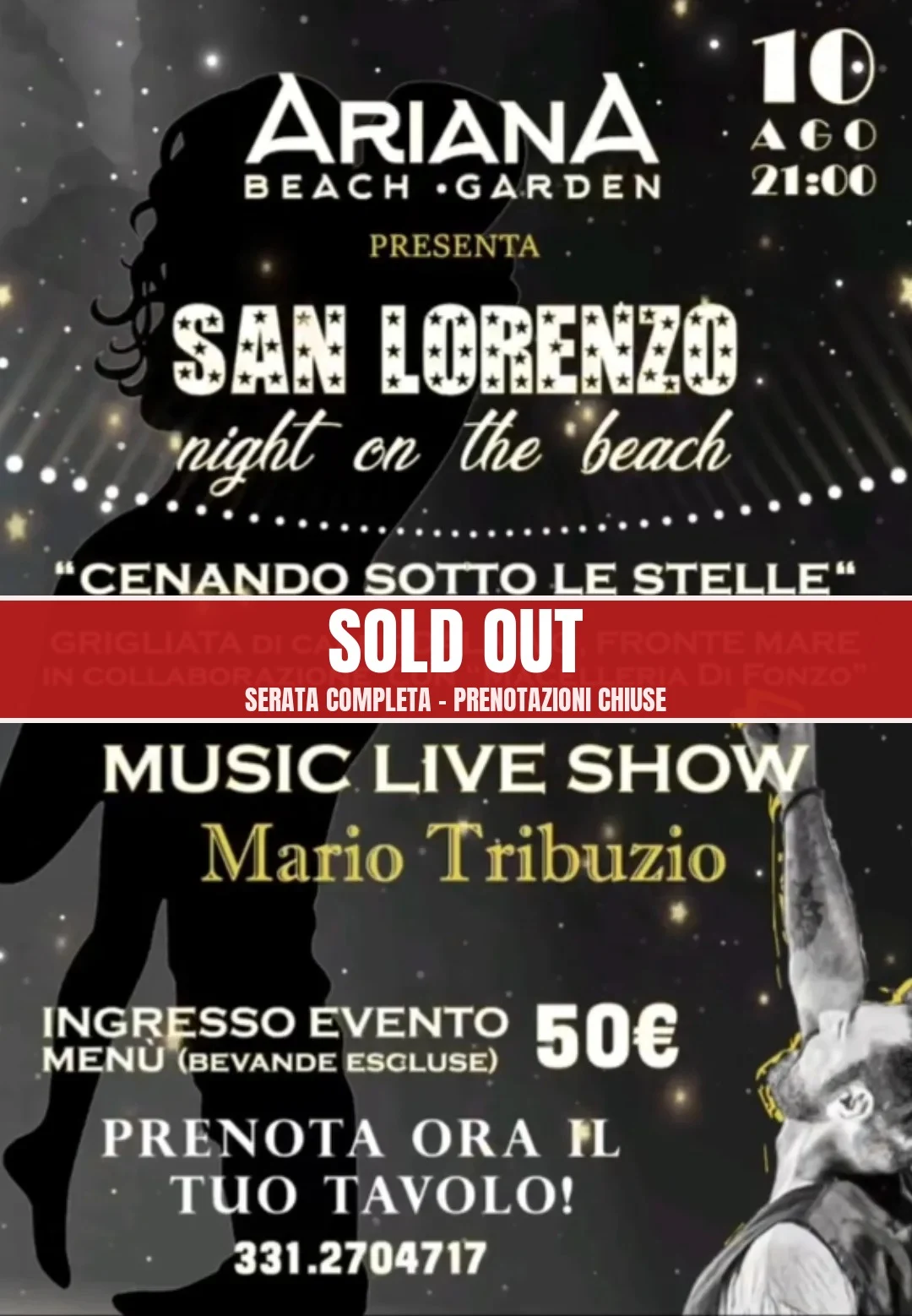
- Events. “What’s on tonight in Gaeta?” gets an answer with times, locations, and flyers, updated daily. A printed guide published in July knows nothing about your tonight.
- Itineraries. Not a one-size-fits-all route: Enea custom-builds it for you — stops, timing, and distances — based on how much time you have and what interests you.
- Weather. Tomorrow’s forecast, right while you’re deciding on a beach.
- Nighttime. More than one in four messages arrives after dark. At that hour, bookstores are closed.
- Languages. Five — Italian, English, French, German, and Spanish — automatically matching the language you write in. The guidebook is translated into one, English.
- Price. You have to buy the guidebook. Enea is free, with no app to download and no registration required.
One final difference sums them all up: a printed guide is already outdated the day it leaves the printing press. Enea ages one day at a time, and every morning someone refreshes it. And every question you read above was actually asked to Enea before writing this page: what you read is exactly what it answers.
Why we do it (and who pays for it)
Enea exists for one simple reason: to make people choose Gaeta. A tourist who quickly finds the right beach, parking without getting a ticket, and the correct museum opening hours is a tourist who stays longer, returns, and recommends the destination. It is destination marketing, done with the most powerful tool available today.
And it comes with a cost worth knowing about: years of development and thousands of hours of work. Artificial intelligence is only the top layer — underneath, there is an archive of over 600 hand-curated local content entries, plus servers, AI query costs for every answer, and daily maintenance. A turnkey system like this would cost a municipality a six-figure sum just for development — plus ongoing management forever. Enea, on the other hand, is a private project, built and maintained by ScopriGaeta without a single euro of public funding: no grants, no subsidies, no cost to taxpayers. It is supported by the local partner businesses that choose to take part.
A point of comparison: Julia in Roma
How much is a tool like this really worth? There is a perfect benchmark. In March 2025, for the Jubilee, Roma launched Julia, its AI tourist assistant: a good project, developed with Microsoft and NTT Data using GPT-4o technology, which speaks more than 80 languages. Declared cost by the Campidoglio: 3,5 million euros in public PNRR funds from the Caput Mundi program — within a much broader tourism digitalization plan.
Roma plays in a different league, both in scale and resources. But the comparison highlights one clear fact: cities that take hospitality seriously invest millions in these tools — and mayors present them at press conferences. Gaeta has its AI assistant, at zero cost to public funds. The difference is that in Roma, people know about it.
Sources on the Roman project: ANSA, Roma Capitale.
The question that remains
For the paper guide, there was the City Council chamber, the official presentation, the mayor’s words about the “strong demand for promoting our area”. For a tool that answers that demand every day, 24 hours a day, in five languages, for free — and didn’t cost the community a single euro — there has never been a single line in any official speech.
We are not asking for financial contributions, sponsorships, or plaques. We ask for just one thing: that when discussing tourism promotion for Gaeta and modern hospitality tools, people know that it exists. On our side, the door remains open.
Frequently asked questions
What is Enea and where can I find it?
It is the AI assistant of Gaeta, developed by ScopriGaeta: you can open it from the center button on the bottom bar on scoprigaeta.it, or directly from the guide page.
How much does it cost to use?
Nothing: it is completely free for visitors, with no app to download and no registration required.
Who pays for the project?
The partner businesses that choose to take part in it. Enea receives no public funding: it is a private destination marketing project, at zero cost to the community.
Which languages does it answer in?
Italian, English, French, German, and Spanish: it automatically detects and responds in the language you write in.
Want to put it to the test as we did? Open Enea and ask it “is the ZTL (limited traffic zone) active tonight?”. Then try asking a paper guide.