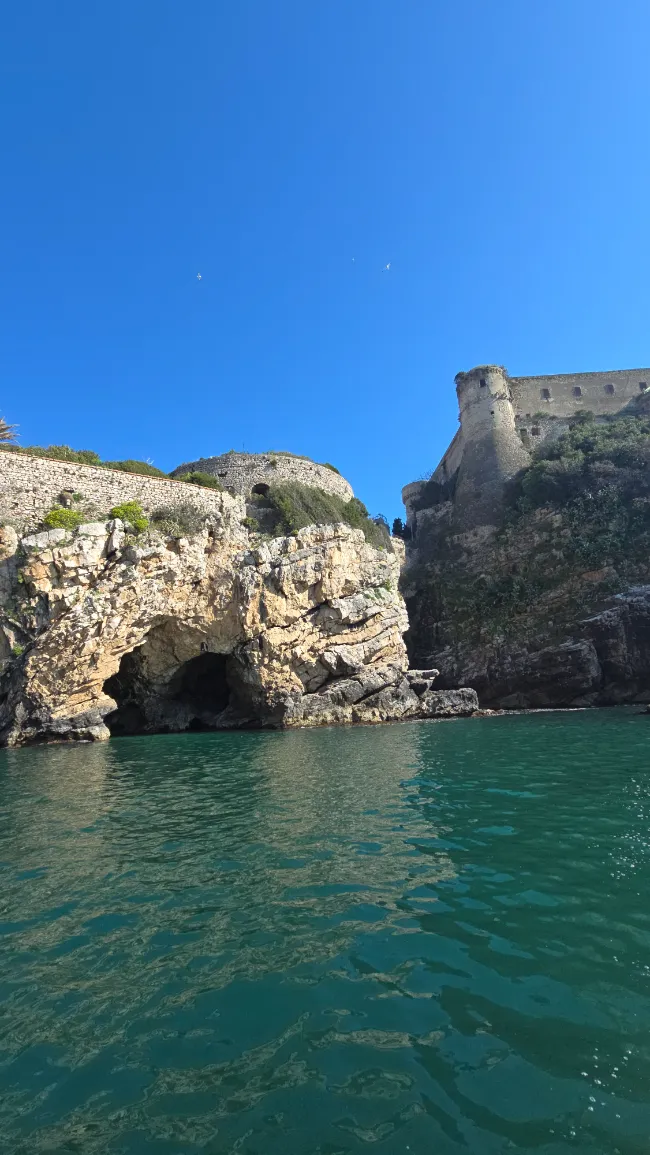


The Charles V Gate represents one of the most significant testimonies to the period of Spanish rule in Gaeta. It was built around the middle of the 16th century (ca. 1548) as part of the massive strengthening of the city’s fortifications ordered by Emperor Charles V to cope with the growing threats of Saracen raids and the Italian wars.
Located in a more inland and elevated position than the later Charles III Gate, this gate was the actual entrance to the “citadel.” It presents a sober and sturdy style, typical of Renaissance military architecture, with the imperial coat of arms of the double-headed eagle (symbol of the House of Habsburg) still decorating the archway, testifying to the greatness of the Empire over which “the sun never set.”
Curiosities and events:
- The gateway through time: To cross this gateway today is to literally enter the beating heart of Medieval Gaeta. In the past, it was protected by a complex system of drawbridges and bastions (such as the Bastion of San Giacomo) that made access by land virtually impossible for an enemy army.
- Resistance to blows: During the many sieges suffered by the city, the Charles V Gate remained almost unscathed thanks to the thickness of its walls and the natural protection offered by the lay of the land.
- Symbolism: In addition to its defensive function, the gate had a strong symbolic value: it reminded anyone entering that Gaeta was a privileged city protected directly by the emperor. Even today, it is still possible to discern fragments of Latin inscriptions celebrating the power of the ruler.